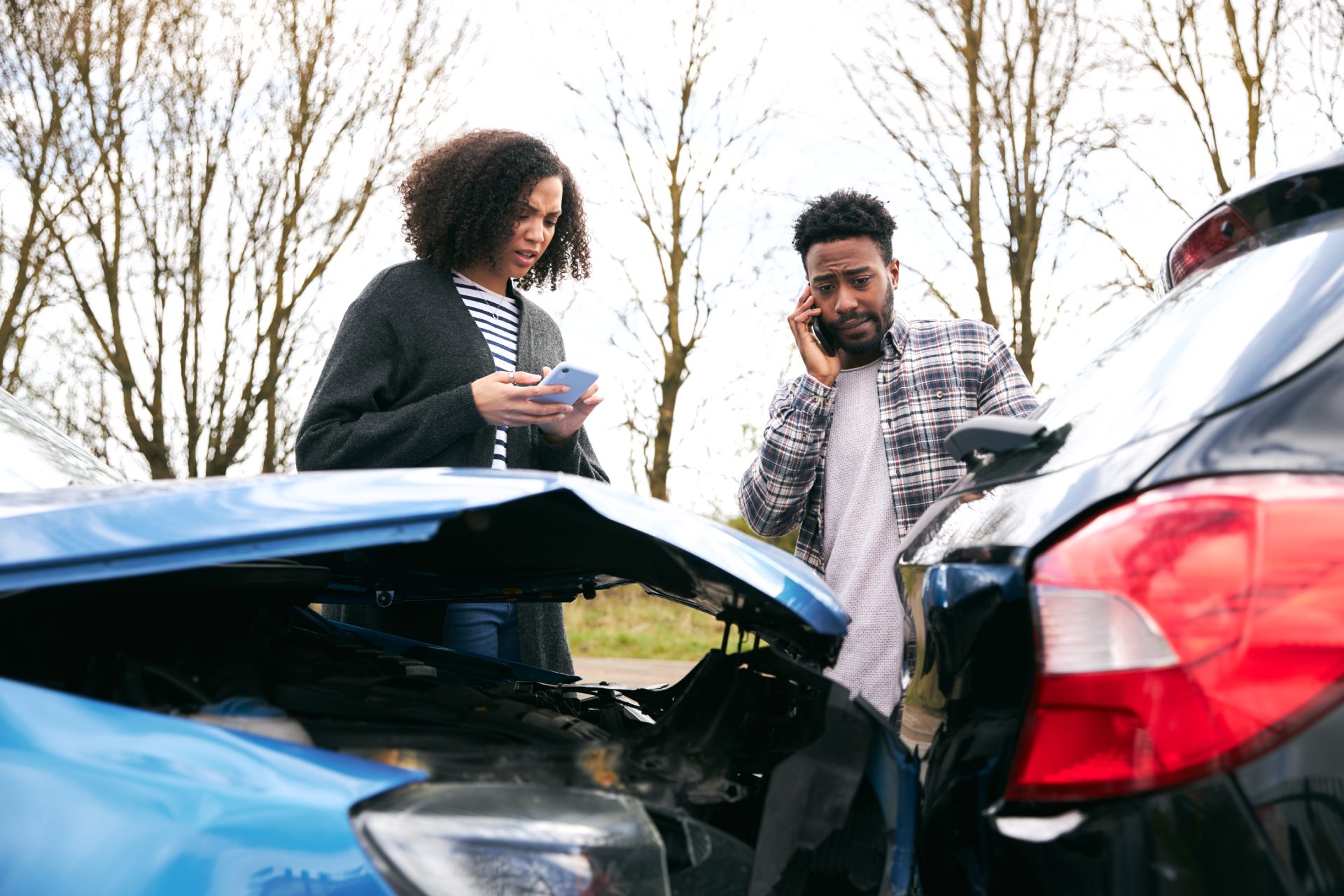
You know what happened. Another driver ran a red light, changed lanes without looking, rear-ended you, or made an unsafe turn and caused the collision. At the scene, the circumstances may have even seemed obvious. Then the insurance claim begins, and suddenly the other driver tells a completely different story.
This situation is more common than many accident victims expect. A driver may deny something they admitted at the scene, claim you caused the collision, or change important details once they realize their insurance company could hold them responsible. When there are no independent witnesses, conflicting accounts can make an otherwise straightforward car accident claim significantly more complicated.
The good news is that another driver’s version of events does not determine liability by itself. California car accident claims are evaluated using evidence, and a driver’s statement is only one piece of it. Photographs, video footage, vehicle damage, witness testimony, and police reports can provide a much clearer picture of how the collision actually occurred. If the at-fault driver is lying or changing their story, the priority is not arguing with them. It is preserving the evidence needed to establish what happened.
Conflicting Stories Do Not Automatically Decide Fault
When two drivers give different accounts of an accident, the insurance company must weigh the available evidence before deciding whether to accept liability. An adjuster may speak with both drivers, review photographs and reports, examine vehicle damage, and contact witnesses. Physical and independent evidence can often support one account while contradicting the other. For example, a driver might claim you suddenly entered their lane, but the location of the vehicle damage and available video footage could tell a very different story.
California also follows a pure comparative negligence system, codified in California Civil Code Section 1431.2, meaning responsibility can be divided between drivers when evidence shows more than one person contributed to the collision. An insurer may use conflicting stories not only to deny fault entirely, but to argue that you should bear a larger share of responsibility.
Evidence Can Reveal What Actually Happened
Strong evidence becomes especially important when another driver disputes your version of the crash. Photographs taken immediately after the collision can document vehicle positions, impact points, skid marks, and road conditions that may disappear once the scene is cleared. Video can be even more powerful. Dashcams, nearby businesses, and traffic cameras may capture the collision or the moments before it, and because some systems automatically overwrite recordings, preserving that footage quickly can be critical.
Vehicle damage may also help explain how an accident occurred, since the location and severity of impact damage can support or undermine statements about lane position or direction of travel. In more serious cases, accident reconstruction professionals may analyze that damage to form an opinion about the sequence of events. Witnesses provide another source of independent evidence, since someone who saw a driver run a red light or make an unsafe lane change has no financial stake in the dispute.
A Police Report Helps, but It Is Not the Only Evidence
A police report can be valuable because it creates an official record shortly after the collision, often documenting driver statements, roadway conditions, and the responding officer’s observations. However, a police report does not necessarily decide who is legally responsible, since the officer may not have witnessed the collision and the report may contain incomplete information. Liability is ultimately determined from the totality of the available evidence.
Not having a police report also does not automatically prevent an injured person from pursuing a claim. When no report was filed, photographs, videos, witnesses, and medical documentation become even more important in establishing what happened.
A Changing Story Can Affect a Driver’s Credibility
A driver who changes their explanation after an accident may create credibility problems for themselves. Imagine someone apologizes at the scene and says they were looking at their phone but later tells the insurance company that you stopped suddenly and caused the collision. That inconsistency may become important if there is evidence documenting the original statement.
Text messages can be particularly useful here. A message sent shortly after the collision saying, “I am sorry I hit you,” may carry very different weight than a later claim that the other driver did nothing wrong. Witnesses who heard statements at the scene may also describe what was said. This is another reason to preserve communications rather than relying on memory, since small details that seem unimportant right after an accident can become valuable if the other driver’s story changes later.
The Other Driver’s Insurance Company Is Not Your Advocate
It is important to remember that the other driver’s insurance company is not on your side. Its adjuster will investigate the accident while protecting the insurer’s financial interests, and if its insured provides a version of events that creates uncertainty about liability, the adjuster may use that dispute to challenge or reduce your claim.
You may also be asked to give a recorded statement. What you say can become part of the insurer’s investigation, so avoid guessing about facts you do not know or minimizing injuries that may still be developing. The California Department of Insurance publishes consumer guidance on how the auto claims process is supposed to work and knowing how to communicate with an insurance adjuster before providing a detailed statement can help you avoid unnecessary problems.
Preserving Evidence Early Can Protect Your Claim
Evidence has a limited lifespan. Vehicles get repaired, surveillance footage gets deleted, skid marks disappear, and witnesses become harder to locate. If liability is already being disputed, preserving evidence quickly becomes especially important.
Keep the photographs and videos you took at the scene in their original form. Save correspondence with the other driver and insurance companies, retain repair records, and keep the contact information of anyone who witnessed the collision. Your medical records matter too, since they help establish the injuries and losses connected to the accident. Avoid confronting the other driver or trying to prove they are lying yourself; the stronger approach is to focus on objective evidence and let the facts establish what happened.
Legal Guidance Can Help When Fault Is Disputed
A disputed liability claim can become difficult to manage while you are also recovering from injuries, attending medical appointments, missing work, and dealing with vehicle repairs. An experienced California personal injury attorney can investigate the collision independently rather than relying solely on the insurance company’s conclusions.
Depending on the circumstances, that investigation may involve obtaining available video, locating witnesses, reviewing photographs and vehicle damage, and consulting qualified experts when necessary. An attorney can also communicate directly with insurers and challenge attempts to assign fault that is inconsistent with the evidence. Every accident is different, but the goal is always the same: developing the most complete and accurate account possible so liability is evaluated on facts rather than whichever driver tells the more convincing story.
Frequently Asked Questions
What if the other driver admitted fault at the scene but denies it later?
An admission at the scene may be useful evidence, particularly if it was documented in a text message, recorded lawfully, included in a police report, or heard by independent witnesses. Liability is generally evaluated using all available evidence rather than one statement alone.
Can an insurance company deny my claim because its driver says I caused the crash?
An insurer may dispute or deny liability based on its investigation, but its driver’s statement is not automatically conclusive. Photographs, video, witnesses, vehicle damage, and police documentation may challenge that version of events.
What happens if there were no witnesses to the accident?
A claim can still move forward without eyewitnesses. Physical evidence, dashcam or surveillance footage, vehicle damage, photographs, and the consistency of each driver’s statements may help establish how the accident happened.
Should I contact the other driver if I think they are lying?
Generally, confronting the other driver is unlikely to help and may create additional complications. Preserving evidence and communicating through insurers or legal counsel is usually more productive.
Can I still recover compensation if the insurance company says I was partially responsible?
Potentially, yes. California’s pure comparative negligence system generally allows an injured person to recover damages even when they share some responsibility, although the recovery may be reduced according to their percentage of fault.
Protecting Your Rights When the Other Driver Disputes Fault
Discovering that another driver has changed their story can be frustrating, especially when you are already dealing with injuries, medical expenses, lost income, and the disruption that follows a serious collision. A disputed story does not decide your case. What matters is the evidence and whether it can establish how the accident actually occurred.
The earlier that evidence is identified and preserved, the stronger the foundation for evaluating liability. At the Law Offices of Ramtin Sadighim, we help accident victims throughout California, including Los Angeles, Encino, and the surrounding San Fernando Valley, understand their rights when liability is disputed and insurance companies refuse to accept a straightforward version of events. Our team can investigate the circumstances of the collision, preserve important evidence, deal directly with insurers, and help determine the appropriate legal strategy based on the specific facts of your case.
If you were injured in a California car accident and the other driver is denying responsibility or telling a different story about what happened, you do not have to navigate the dispute alone. Contact the Law Offices of Ramtin Sadighim for a free consultation to discuss your accident and your legal options. Our firm handles personal injury matters on a contingency fee basis, meaning you pay no attorney fees unless compensation is recovered on your behalf.
Call us at 888.999.8744 or visit www.CaliAccidentAttorney.com to learn more.
 Individualized care is our specialty at the Law Offices of Ramtin Sadighim. As an experienced Los Angeles personal injury attorney, Mr. Sadighim understands that every client, case, and circumstance needs a different approach for the best results.